Showing posts with label research. Show all posts

Saturday, July 15, 2023

The Canopic Jars of the Medina al Taht

[written up for us by Jacob, who runs adventures in the City Below]


 Several expeditions into the Medina alTaht earlier this year saw some decent lucre, but also collected a number of odd canopic jars, two of which were made of Zortrium.


These jars were collected at the request of Farhat alFassad, self-proclaimed princess of the Medina alTaht. However, given the creatures which previously possessed the jars the party spent some brief time investigating the things only to discover that, at least, the non-Zortrium jars contained life. And so they held off delivering these jars to Farhat, in favor of spending a month investigating both the jars themselves, and Farhat, that they might have more information as to what these could be, and what might be her intentions with the jars.

The scribes note the results of some of those initial investigations here, as a reminder to the players:

  • Wyllow explained that the jars are used in burial rights in her culture. These jars are made to carry the soul of the departed on to the next life. The more plain are, of course, the souls (or perhaps the strength? Possible misunderstanding here) of favored servants, while the ornate is the actual soul of the lord.

  • No energy was detected within the jars

  • Life was detected within the clay jars

  • A jar without life was found, and opened. The contents were a dry dusty substance, the inside walls of the jar smooth.

First, let us address the jars themselves. These jars, though obviously quite old, are very well maintained. None of the jars have any particular labeling, text, imagery, or otherwise. Additionally, the “plain” ceramic jars also do not have unique tops, they are all simple tops without much shape to them, rather unlike the picture posted above. The Zortrium jars, however, have a unique topper and contain some text. The first canopic jar has the renu-like head seen above. The second a somewhat Kzin shaped topper.


To continue researching these things, Bart first took to the Facility, having been the sole location where the strange white-haird monsters (from which one of the zortrium jars was recovered) had previously been seen. Bart spent several days engaged with researchers of the Bani Dawr, the strange libraries of knowledge provided by the Facility, and, ultimately, one of their specimen containment facilities. He learned several key points of information about the jars, and their origins:

  • Whomever previously occupied the Facility was, largely, at war with some faction often referred to as demons. There are references to canopic jars recovered from certain expeditions, though the ultimate fate of those jars is unclear.

  • There are references to some unnamed rebel faction within this demon army that the Facility owners worked with on occasion.

  • The Bani Dawr researchers introduce Bart to Dilag. A dark skinned fellow with a strange crest upon his brow (that of a lunar disk crossed by a spear), presently held within the Facility’s containment cells. Through the aid of comprehend languages (and some plying with food and drink) he explains his limited knowledge of the jars, describing how his god would keep a number of the jars in his throne room. The jars would sometimes be gifted to allies as a show of trust, or a favored servant would be granted a great boon from one of the jars gaining the strength and life of past wielders of the soul contained within while still remaining themselves. Why, he himself received such a boon, though he knows not how it works, nor why, only that it does. He doesn’t remember feeling any different before or after the boon, just stronger.

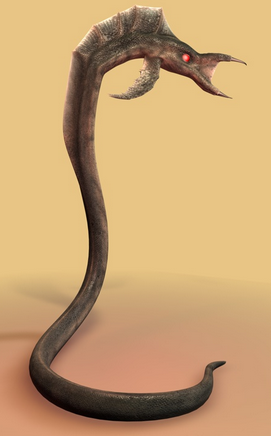
  • Bart is also able to do some more in-depth investigation into the jars themselves, as the Facility happened to have enough data on record to produce a replica for him in the simulator. Through that he was able to learn that the jars, when opened normally, contain a strange liquid that was warm to the touch as well as a squirming snake like creature that the Facility referred to as an Uld. The snakes within the plain canopic jars were notably smaller than their Zortrium counterparts.

Joining in the book-learning research, Razo (at the behest of the Survivors, being that Razo did not go on any of the expeditions herself) investigated a certain gilded ritual scroll from a previous expedition. It was remembered that this scroll had some writing on it similar to that which Bart translated relating to the jars. Some of the text translated and referred Razo to ancient stories. In these stories the protagonist would devote themselves to their god, and through rigorous service be granted power and longevity. These things are corroborated by the scroll which describes a magical ceremony that prepares a human to accept these divine gifts, at the end of which it describes a canopic jar that contains a young soul to be infused into the body which will provide great strength, long life, and protection from disease.


While Razo and Bart dive deep into books and research, Najm, Fa-Min, Gan ad-Din and his crew of musicians make their way to visit Farhat, and see what they can learn there. Najm, alone, was rebuffed several times, Farhat claiming to be busy and unable to attend to them unless they were delivering upon the promised canopic jars. However, when Najm returned with the others as entertainment she granted entrance and met with the group. Najm, focusing on building his reputation with Farhat more than gathering information, got little out of her other than that she desperately wants these jars, frequently referring to the undead, banditry, and Kzin threats. She insists that it is purely to help safeguard the Medina, and in so doing the whole of Cothon, from the many evils insinuating themselves amongst the dark tunnels. 


Gan and Fa-Min, being somewhat less focused on Farhat herself, are able to observe the goings on in Farhat’s court somewhat more, noticing that there seem to be a surprisingly few number of guards in rotation. And when chatting with the servant staff after their performance the staff (while actually fairly well treated for serving staff in dark tunnels) are also in small number. What little information is collected from the servants reveals that Farhat’s forces may not be holding up so well against the various forces encroaching on the Medina, even to the point that they seem to be unsure if they will survive the year without something drastic changing.


Finally, Durham and Pako visit their friends in the Lonely Cat, trying to ply information regarding Farhat from the denizens there. Alas, Quinn was only available for a short time to answer their questions. He explains that Farhat was once a pirate, that life taking her all over the Denyan sea, but for whatever reason she struck up with some of her former crewmates and decided to make a go of it in the Medina alTaht. She and her retinue have patronized the Lonely Cat a number of times, it being the best tavern under Cothon and all, and she has always treated Quinn and Cassius with respect and courtesy. She even posted guards for a short time when a big scuffle happened topside, to help protect Cassius and I from any fallout.


As a reminder for the party:

Farhat is willing to pay 1000 dinars per sealed canopic jar. She is willing to grant a single selection of some of their finest jewelry (the cheapest of which is likely worth at least several thousand dinars) for at least 10 jars, and another selection for a “green metal” Zortirum jar. This would be similar to “finding the right buyer” for an item, and so any dinar value recovered here will count as XP to be divided amongst the various participants in the expeditions.


You all have:

14 ‘plain’ canopic jars

-No life is detected within 3 of these

-1 of these has been opened, the seal broken

2 Zortrium canopic jars

-Being Zortrium it is not possible to scan for life in these jars


Friday, January 20, 2023

From Bartholomew's Journals: About an Orb


From the Journals of Bartholomew Pettibone, of the House Pettibone

A Purveyor of Enchanting Sorcery


18 January 2023

About An Orb

(When Does An Item Become An Artefact?)


It has been over-long since last I put ink to parchment. Much has transpired, but as I have limited time at hand, I will have to be brief, and then get to the main point.

First, I have unwittingly enmeshed into mine the memories, the experiences, the desires, the knowledge, the fears – and more – of the many past lives of the one known as Hamdi. Yes, even that great explorer and seafarer of old, Hamdi. Through a strange quirk of fate, I encountered a certain being who provided me with a particular elixir. I partook of what was offered; I felt no hint of malevolence in demeanor of presenter or gift. The experience that followed cannot be explained in words – suffice to say, it was “mind-altering”. And so, while I remain Bartholomew Pettibone, of the House Pettibone, I am also … Hamdi. I am both at once, yet neither alone. I am always lucid, yet I feel at times that I walk in a dream-scape, or a dream-time of constant deja-vu. Things once unfamiliar, and even still unfamiliar, instantly become familiar. I can understand how utterly mad it sounds, and perhaps I will elaborate later, but there is a more pressing matter.

An orb.

Many months past, Gan and I entertained an invitation from our good friend Lord Althis, who resides in the Tower Invincible. Durham and Pako were invited alike. Althis was in need of assistance exploring and clearing out some of the territory that he is currently claiming to be under his “protection”. Eyeing this as a potentially lucrative adventure, we accepted. ((For anyone wishing to get more back story – see session #65)) One of the spoils of that expedition was a unique “crystal” orb, in combination with its custom metallic, tripod stand. The circumstance of its unveiling, and the precisely detailed artwork that adorned its stand, seemed to me to indicate that it was a singular and exceedingly rare prize. Lord Althis, being a generous benefactor, was good enough to allow me to claim it as my own – my boon for assisting him.

After returning to Bob Hall, I put away this massive “crystal” and focused my attentions on many varied, unrelated avenues of research. And so the orb sat, forgotten and virtually untouched for some time, on a shelf aboard Bob. Perhaps this is a feature that surrounds and protects the stone? However, not long ago, I rediscovered the orb as I was searching for other items aboard Bob, and began wondering about its existence within the Tower Invincible – a place that seems to be a nexus of great power. Using a cunning spell taught to me by my comrade Heijo, I was able to open my eyes into a new dimension of energetic sight, and determined that the orb enveloped and radiated an intense magical energy.

Since then, I have given over a fair amount of time investigating the orb's properties and potential pedigree. What I have learned is interesting, and certainly exciting, especially concerning its properties. Yet, while information about its pedigree has been somewhat cloudy, it has also made me cautious. I, and my companions have been involved in some deeply fantastical adventures, to be sure; however, after my recent evolution, I can't help but feel that I have in my possession an artefact of great power and ancient lineage. I believe it is a piece of history that has the ability to alter … well … everything. Everything.

While I find that the Hamdi part of me wishes to sojourn down a different path at the moment, I feel that the orb should be given some modicum of continued scrutiny. As such, I will be turning the orb over to Sesel, to maintain in his possession, as steward, until I may request its return. I have the sincere hope that he can put the resources together required to further research this enigmatic sphere. And with its giving over, I will share the information I have gleaned so far. And at banquet within the halls of Sesel's iqta, I will share this info with others within my cabal of barbarians: Heijo, Durham, Avinnia, Najm, and Arngeir … and Lord Althis, of course.

First – I say it is “crystal”, and indeed it appears as such, but I have not yet been able to determine its exact composition. The orb is approximately the size of two closed fists held close together. It appears to be a perfectly smooth, perfectly shaped sphere. The material is dark, almost black when first gazed upon. However, upon closer inspection the matrix is seen to be translucent and smoky. The tripod stand upon which it rests is composed of three rods of an unknown metal, but I would venture that they are zortrium, or an alloy of the same. Perhaps Durham can verify this. The designs that are in relief along the entire length of the rods is quite detailed, and defies easy description. Without a doubt, the designs are quite unique, and most certainly evoke stories of great deeds in ages past. I could not venture to place a monetary value on this artefact, even if I could say exactly what it is made of. And of course, there is the fact that it courses and pulses with magical energy of an immeasurable amount. Most importantly, I have been able, through deep and focused concentration, to peer into and sweep away the cloudiness within the orb, “seeing” an alternate location. Because of these visions I am convinced that the orb has the ability to facilitate communication over distances – small and great.

The place that has been revealed to me continues to appear somewhat misty, but has a familiar feel to it, appearing much like the central command bridge of Bob – but greater. And it is, in fact, an active bridge; many of the visible “magic mirrors and plates” are lit and alive with action. There is also, most definitely, a being of some kind lurking at that location, one with an odd, unnatural gait. However, I have not been able to see them clearly, as they always seem to be just on the edge of vision – ghostly and gangly – veiled by the smoky mists that continually swirl within the orb.

I have attempted to push ESP and various other spells through the orb, even mundane speaking, hoping to initiate contact or a conversation. But so far my attempts seem to have been unsuccessful. Perhaps Sesel or one of my other companions may have better luck focusing their unique psychic abilities through the orb?

Even with these failures, they have helped me flesh out some of the heritage of this artefact. Initially, Gan was able to put me in contact with a certain patron of his within the Piedrajoya – the secretive guild of jewelers and gem-cutters. This patron was able to provide me with some bits of old, vaguely connected, and guarded information. During our conversations I was given over to the feeling that what was being divulged was not necessarily meant for my ears, being not of that guild. However, the easing of inhibitions, brought on by liberal amounts of excellent Mysrian wine, combined with my being a trusted confidant of Gan's, brought forth a tale of great interest.

I described the orb to this guild master, implying that I was researching its existence for an educational thesis; I did not foreclose that I had the very same artefact in my possession. In a hushed and covert tone, with words slightly slurred by the numbing of tongue with wine, it was accorded that stones, gems, orbs, “crystals”, of the type I described, were exceedingly rare, coveted, and of untold value. There was a deeply held and fervent belief among the Piedrajoya that an unknown, but perhaps small number of these orbs existed in the distant past, and may still exist in even smaller quantities today.

The particular orb that I described was noted to be one that was gifted to either the ruler of Old Tsurr, or their steward/castellan, by mysterious beings from outside (far outside!) the realms of men/klackons/k'zin/etc. Demons?!The jeweler believed that these beings have only ever been known as the “Guardians of Old Tsurr”. However, more on this later. The tale-spinner concluded his confessions by implying that the orbs were somehow used for communication between Old Tsurr and those “Guardians”, and my experience with the orb certainly lends validity to this belief – to some extent at least. Some unknown slight, or falling out, caused the situation between Old Tsurr and the “Guardians” to become strained, and ultimately severed. And so, this particular orb was believed to have been hidden away, neglected, and forgotten – for ages.

Armed with that bit of fantastical knowledge, I pored through the vast library of the Kantor, where the miners and gemologists go to drink, swap tales of prospecting, and cavort. In particular, I spent much time going over entries in the massive “Almagest of Kushvant Sen”. Within that great tome I found descriptions of “crystal” orbs, similar to what the gem-cutter had related. Stories, purported to be fact, told of how these stones were held as great and powerful examples of the power of the Kings of Old Tsurr, that their function was to facilitate communications, and that they were connected with beings called the “Guardians of Old Tsurr”. What the jeweler had related seemed to be confirmed.

This particular orb was said be called the “Gloaming Stone”, and is believed to be at least 2000 years old. From what I could determine it was lost to modern times and the thoughts of men (well, most men) at least 500 years ago. Many historical figures have been associated with this particular orb – Dalan II, Dalan IV, and the great warrior Arumanz. Furthermore, it appears to have a connection with the Fortress Moon, as well as the “Aegis of the Demon Queen”.

Of particular interest was a tale that described the beings – the “Guardians” – who gifted the stone as being called “Selenites”. These Selenites, it was noted, had been enslaved by Demons of the Fortress Moon. However, an accord had been struck between men and Selenites to usurp the Demons. This was successful, thanks to the leadership and strategy of Dalan II. This success led to the fellowship swearing what is known as the Sicarian Oath. During this ceremony, the orb, called then the “Crystal of Shadow”, was gifted by the Selenites to Dalan II, in order to seal their friendship and alliance.

The purpose of the orb was described in the Almagest as providing communication between like orbs and their “Guardians”, and may even have provided some means of instantaneous aid to occur between distant locations.

Unfortunately, I have other duties and researches that I must attend to, and will not be able to continue poring over this “Gloaming Stone”. And so I give it over to Sesel, hopeful that they may be able to investigate its properties and heritage further. I would offer that the term “Selenites” is an old Tsurrian reference to living beings comprised completely of stone – particularly of moonstone. I know this sounds impossible, but we have encountered weirder things – even beings seemingly made only of water! Perhaps concentrating first on who or what the Selenites are, and where they might be found, and what the Sicarian Oath is, could be productive. Also, the idea that the orb conveys communication over vast distances gives me pause to consider a potential connection to how the Hanse seems to have such excellent “luck” in knowing what cargoes might procure the greatest profit in far-away markets. Perhaps other “Gloaming Stones” are in existence, and are being used? Finally, within the Herme and Stone there is an odd pillar of alien stone that tugs at an old Hamdi memory – yet it remains cloudy and difficult to access clearly and coherently. When pondering the orb, and thinking of this pillar of stone, something tickles deep down in my mind – I feel that there might be a connection there, but it eludes me. Anyway for now, I leave the “Gloaming Stone” in Sesel's capable possession – with these potential clues to follow – and hopefully we may eventually learn its full potential, and be able to use it in a manner befitting its seeming illustrious heritage.


 [for this account, written by Phil for his character Bartholomew Pettibone, Bart earns 100 xp per level]

Friday, December 3, 2021

Adventurous Accounts from the Sixth House

Finding themselves in possession of a great collection of Klackon khipu-texts--strands of silk knotted in intricate patterns to form words and phrases--the Survivors of the Tel have directed their in-house researcher Razo, with the help of fellow Survivor Raoden (who can magically read languages) and friend of the Survivors Gan (no relation to Gan ad-Din) to translate and transcribe the collection. While that herculean effort will be detailed in a near-future addition to this chronicle, in light of the stated intent of the expedition expected on 4 December (tomorrow as of writing this) the Scribes thought that the particular details related here were of enough interest to post separately (and forthwith):


Amongst all the research notes, exploration accounts, and correspondences in the various texts collected by the Survivors and their companions--all the contemporary material, rather than the literary texts and histories, &c.--a certain strand (as it were) stands out as quite interesting, developed in a series of three semi-parallel accounts. In short,

  1. A narrative account of the Sixth House's delvings deep into the Tel seeking a rich (rumored) zortrium vein, its discovery, and what transpired thereafter, kept by leading-dore Itzkatl Xhoa
  2. A court document detailing the Princess Zaharxa's entertaining of a strange delegation of grey-men and their cloaked escorts
  3. A separate narrative account of of the Sixth House's use of a "translation pad" to explore deep caverns found to contain domed "life manufactories" guarded by terrible demons, explorations led by natural-philosopher Xixitlatzali (a dore)


The Accounting of Itzkatl Xhoa on the Zortrium Vein and What Lay Behind

This set of khipus comprise an ongoing set of reports sent to the Princess Zaharxa over the course of Itzkatl Xhoa's explorations. It begins with an overview of rumors of a rich vein of zortrium being located at a certain stratum of the Tel al Safina, and of his use of diggers to mine deep into the mountain in hopes of finding it. When they do, they cannot cut it, and so turn to the Barcidae, and elsewhere, seeking tools to help cut into the vein for usable ingots. Finally securing efficacious tools, they begin the work of mining it:

... When we had thus secured the torches from the Zoq-Fot-Pik, we had already dug down and under the vein, and so we started to cut there, because it was easier. And right away, the torches told against the zortrium, and we cleaved off a huge slab in a watch or so. But our enthusiasm was too much, and we had to halve that slab even to get it out of the hole, and cut it down again to form ingots.

After that, the workers got into a rhythm, and we had a holdful of ingots in a few shakes of a glowglobe--except that was when we cut through the outer layer and found that the vein was hollow! Like the carapace of some huge and desiccated dlakolel, so that once broken through there was much room on the other side. Strange passages carved through the vein, almost like through a worm-riddled fruit, except the passages were obviously built--but I'm getting ahead of myself.

When once we heard there was a space within, I sent Kilik with some her scouts to look inside, and to report to me what lay within. She reported as I have described, strange passageways riddling the metal veins. So much metal lay beyond that we are rich beyond our wildest imaginings--the Sixth House could outspend the Ten Cities League with all that lies buried here!--but it is not unguarded. Several ru'un came up out of the darkness therein and would have destroyed the scouts entirely if Kilik had not broken the red eye of their leader with her estoc. Even still, only half the scouts returned. ...

And later:

... and as you commanded, so we have obeyed, and though many scouts were lost, still they have found many treasures. In one place, strangely unguarded and lit as if waiting for someone, Kilik did discover a sheet of strange metal attached by metallic spinal-column to a pair of smallish boxes. All could be moved, and so Kilik and her scouts lifted it all up and hauled it out of the place without incident from ru'un, and now it is in our possession. I will send sketches to the Princess and her advisers, while I and my apprentices look into the nature of the thing. ...

A number of other episodes follow, detailing especially the heroism of Kilik and her scouts in facing off against ru'un, and other strange things, some perhaps demonic in nature, others frankly bizarre. Not all come from inside the vein of zortrium, as the deep caverns are home to strange worms and other malevolent creatures.

All the while, Itzkatl Xhoa has his workers cut off thinner slabs of zortrium to be shaped into ingots, to be sent up to the workshops above, while he tinkers with the strange sheet of metal and its boxes, and finally discovers that it can dematerialize objects placed onto the pad when a certain combination is pressed into the studs of one of the boxes.

Later, Itzkatl Xhoa comes to the realization that the objects are not dematerialized so much as "translated" elsewhere, and can be brought back. This then, is the "translation pad" ...


The Princess Zaharxa Entertains the Grey Envoy of the Erga

 At about the same time that Itzkatl Xhoa has figured out that his strange device is a "translation pad" that can send and receive objects, a strange delegation arrives in the market of the Great Spire, seeking an audience with Zaharxa of the Sixth House. It is said that they have come up from the tunnels and caves below, rather than entering by the outer doors; and they are a peculiar sort, of such a like as thought only to appear in old stories and hero songs:

... As they entered the audience hall, a great murmur passed through Zaharxa's entourage. "See, it's only a child!" ... "But the color--so grey, so unhealthy. And not human at all." ... "The cloaked ones walk with warriors' gaits." ... &c. &c.

The envoy was indeed the stature of a human child, but its skin an unhealthy grey pallor, its eyes large, black, and terrifying. It was escorted by tall cloaked figures that stank of meat, all broad of stature, except the one closest the envoy, which was tall and narrow, and silent as it walked.

All bowed before Zaharxa, and the envoy intoned a greeting in a strange burbling tongue that none recognized--and yet we all understood it implicitly, as if we did. "We are but tools of the Erga Chondrias, yet we bear greeting from them to thee, great Princess. The Erga is a great sorcerer, and they have seen the depths to which thy Sixth House has plumbed, and the greatness to which thee and thine aspire. Yet they fear that in thy ascendency that the old terror will be renewed--the terror of the Doulii and their Immortal Columns! They ask us to ask thee, great Princess--how might we find Accord, as was found between thy Xholda cousins, and the humans of the Cities?"

I looked to the Princess as this was said, and I saw that a fire had been lighted inside her, to be so likened to the Immortal Doulii, but she was rightly chary about it, deigning not to show how she gloried in it to these strange delegates. "We are Attines," she said, antennae waving coyly. "Our ways are not Doulii ways." And though I stepped forward to translate, I found it unnecessary--the Erga's envoy already was nodding. The Princess continued, "Stranger-guests, be welcome in our abode, drink mold-beer with us and be at ease. And let your Erga know of this munificence of the Princess Zaharxa, that all who come humbly to her will be treated likewise, however great she may become."

This speech we all felt was good and dissembling, true regardless of our ambitions, and the delegation seemed to take it well. ... 

Many speeches and counter-speeches follow, promising mutual friendship and aid, and goodwill all around. Izlutzl, the author of the account and the main translator-dore for the Princess Zaharxa in her audiences, maintains that the Princess was exceedingly crafty in her exchanges with the envoys, and was able to glean more about their purposes than reveal about her own--though both seem to amount to little in his telling of events.

The most significant item in the exchange, in light of the other accounts, was a set of "navigation coordinates" given by the envoy to the Princess. According to Izlutzl, this was gained by most devious diplomacy on the Princess' behalf (aided by Izlutzl, of course), in which, using the discoveries of Itzkatl Xhoa she feigned mastery over the "translation pad" and its uses.

... "So of course you have explored [coordinates redacted], then," the envoy declared. "As that is most easily discovered. But perhaps we could exchange knowledge of other places, if the Princess deigns it to her liking."

At this, the illustrious Zaharxa breezily dissembled. "It is no account to me what else you have found, as I'm sure my dores have already found the same, or gone beyond your Erga's own dores."

It was shortly after this that the Princess began to show signs of weariness, and called for her slaves to come and bear her out of the audience hall. She bade the delegation remain as long as they wished, enjoining them to the mutual hospitality that they had all harped on for so long; but the envoy admitted exhaustion as well, and declared that the entourage of Erga Chondrias would return to the Erga that night for rejuvenation. So the audience was broken with little ado ...


The Accounting of Xixitlatzali on the Exploration of the Life Manufactories

After the audience with the strange grey envoy of the Erga Chondrias, Princess Zaharxa ordered her natural-philosopher Xixitlatzali to gather scouts for exploration across the "translation pad", and to convene with Itzkatl Xhoa for briefings on the use of the device.

Despite Itzkatl Xhoa's natural jealousy--his crew had found the device, why should he not be the one to first explore "through" it?--the Princess' orders were of course to be followed, and Itzkatl Xhoa duly showed Xixitlatzali its use; and Xixitlatzali entered the coordinates inadvertently supplied by the envoy into the device and thus "sent" and "received" the same object without incident. After that, a scout was sent through and retrieved, and she returned without any obvious injury. A period of cautious experiments and explorations followed (all while Itzkatl Xhoa's crew continued cutting zortrium and sending scouts into the interior).

What was ultimately discovered was a great cavern-complex far below the surface of Ardha, with strange dome-structures built into the space:

... They found huge domes in the cavern, built up with what seemed to be metals of strange alloys--seemingly translucent? There was no obvious ingress.

A stair found carved into the cliffs to the west led down into narrow caverns, and though these at first seemed promising, they only issued ultimately onto another large cavern with equally inaccessible domes.

At last, after much exploration, the first cave on the right hand side was found to contain a similar translation pad--though only activated by a curious medallion found on the husked corpse of an ancient creature. By this device we were finally able to penetrate into the secrets of the domes.

What we discovered is a cornucopia of lost knowledge! ...

The text goes on in rapturous language about the wonders that Xixitlatzali will bring forth from the ancient lore, and all the secrets stored in the domes. They are found to be some kind of "life manufactories" where life can be created in various vats, and stored in magical sarcophagi, &c. &c. Untranslatable glyphs cover everything, and there are strange magic mirrors abounding. Signs associated with the demons of the Fortress Moon are also everywhere, and some of Xixitlatzali's scouts encounter strange shadow creatures that seem demonic.

So Xixitlatzali has a demon-codex brought to him, and dubiously identifies the "shadow-demons" as "notules", flying shadows that seek living-warmth, and has ember-fires built to attract them away from the Klackon explorers.

Then, discovered within the depths of the strange domes:

... Klackosn and Hlyss of ancient stock, suspended in strange not-death. I see the likeness of the ancient Doulii in them, great warriors who swept all before them!

This must be the place where they were originally created--bred? built? nurtured? But all those in the sarcophagi we open putrefy shortly after their release. The magic here is strange. Difficult to parse. So I have sent my scouts and apprentices to look for other clues.

Fortunately, one Droxa has returned with other reports--smaller creatures, fellow arthropods, in eggs that are yet well preserved. I am certain--this must be where the ancient Heroes devised our glorious ancestors, as well as their fleshy counterparts, and from here they set them on Ardha to walk in glory. But we have degenerated, as is obvious--and so we must begin again with the smallest of our fellows, and see how the Heroes (the Gods themselves?) devised our glorious ancestors.

The work begins forthwith. Droxa and her scouts are already hauling the great eggs up to the laboratory, along with other specimens and materiel. As soon as all is ready, I shall put knife to flesh and look behind the veil of mere materiality ...

Some of Xixitlatzali's research is already known to the Survivors, in the spellbook The Pale Beetle Under the Knife, and the many biological notes that were translated along with it. And, of course, the fate of the Sixth House is now known to all--cursed by a strange parasitical plague, brought on by these delvings into ancient secrets better left unknown, which brought utter devastation to the House and almost could have destroyed the rest of the Spire-Klackons if not checked as it was.

But there's still so much to puzzle out! Surely our heroes won't succumb to the same hubris as Xixitlatzali and the rest of the Sixth House. Surely not! ...


Thursday, November 25, 2021

Two Rings and a Gem -- Researches 2/2

Being a continuation of various research-undertakings and other pursuits of  the adventurer-barbarians of Cothon:


the Tumbaga Ring

The sorcerer Bartholomew Pettibone has in his possession a ring, taken on an expedition into the Necropolis of the Tel--perhaps from the very tomb of Itra the Swift?--made of red-gold tumbaga, which resembles the beaked skull of some creature with three eye-sockets; a quite gaudy thing that would sit over an entire first knuckle if worn.

except red-gold and with three eyes

Noted as magical by Heijo of the Survivors of the Tel, Bart last month spent some time looking through various magical treatises and scanning old poems and hero-stories, looking for something like it that might indicate its sorcerous function.

Thinking that the beaked triocular head resembles that of the giant dzor (image), Bart begins his inquiries there, asking associates and tavern-patrons if they've heard anything about a dzor-ring. Though few of these result in any really useful information, through conversation, Bart is reminded that the Colossian Oracle is said to be guarded by giants--dzor in fact!--and that it is counted strange just how well under their control the Oracles have these dzor, who are otherwise impossible to bend to the wills of men.

Thus curious, Bart sought out books and other sources about the Colossian Oracle, hoping to discover some correlation between their mastery over the dzor and the ring he now possessed. After hours of poring through tomes and scrolls, he finally came upon something--in certain old annals, the Oracles are described wearing the Rings of Ta'ir. Searching further, with the help of conversational suggestions, he found a fuller description of the rings in an old hero-song, where Nayran the Sailor, who plied his ways among the Denyan Isles, was first presented with such a ring by the Oracles because of their favor; and second he was delivered from the talons of Alkari pirates by his possession of it, when he showed it off to them and they bowed before him.

Per the story, a Ring of Ta'ir (or is there only one?) compels the obedience of dzor, and hlaka, and shanu'u, and giriku, and all those "born under the light of Ta'ir's Lordship". It appears to Bart, therefore, that this ring of his is a kind of ring of mastership over similar such creatures. (in the story, the Alkari only bowed to it, and released Nayran; who knows the truth, but the implication is that they respected it, but were not compelled by it)


the Gemmed Gorget

On the same expedition noted above, a gorget of blued steel was recovered, set in its center with a dark red gem that seems to glow malevolently of its own accord. Clearly magical (again, thanks to Heijo!), the gem seemed to pulse some kind of power, though noticeable only to certain of the company. Raoden feels queasy in its presence, while Sesel notes a kind of itching along his scalp; and Revna mentions the feeling of being watched by someone unseen when around the gem.

Despite Revna's apprehensions, the gem seemed no "seeing-crystal" when probed; rather it appears to house a kind of "psychic poison" affecting only those individuals who are especially psychically sensitive. After some experimentation, it is determined that anyone wearing the gorget who is subjected to any mind-affecting ability "transmits" the poison in the gem to the person affecting them--i.e. a magic-user casting ESP on someone wearing the gem would expose himself to the poison!

Just what the psychic poison does is uncertain (barring further experimentation), but that its unpleasant to suffer is undoubted.


Durham's Signet Ring

No note about research, rather this is a record of Durham's seeking of someone to make for himself a fine signet ring with which to seal the official documents of his own Ringing Anvil, as well as of his own private missives.

Well regarded as he has become at the Kantor Kabljauhof for all his assistance in clearing the pirates out of the Ocean's Throat, Durham was able to get a recommendation from the Mormaera of the Kantor to the lapidary Golden Arts, a shop of the Piedrajoya Guild (Guild of Whitesmiths and Lapidaries) which is happy to deal with barbarians. Following up on this introduction, Durham pays 200 dinars to the Golden Arts for a gold ring of unique design, the design of which will be destroyed after the ring is completed, to ensure its uniqueness.

Presumably, the design of the ring's seal is something like that of the sign of the Ringing Anvil (above), though the actual details are up to Durham to decide; but whatever those details, let this stand as a note that Durham has been granted an introduction to the Golden Arts, and is now acquainted there; and that a relationship could be further cultivated between him and the lapidary there, such that further services might be offered to a friend of the shop.


Two Swords and a Mirror -- Researches 1/2

Much activity has passed in Cothon by various barbarian-adventurers pursuing their interests, unrecorded as yet by the Scribes--but to be recorded now.


the Scimitar of Vikonyá -- the Last Goodbye

Just a couple weeks ago, Gan (no relation to Gan ad-Din, companion and servitor of Bartholomew Pettibone) was commissioned by Sesel of the Survivors to do some research on several items. One of these was the scimitar taken from Vikonyá, a pirate-sorceress who was captured at the same time as the capture of the pirate-galley Darkwing.

The sword itself is beautiful; finely balanced so that it swings easily in the hand, but with good heft to the cutting-edge, so that it makes an excellent weapon; but the blade is acid-etched with beautiful calligraphy, making it a work of art as well:

أنا الفاصل بين الطرق ، الوداع الأخير.

من يستخدمني سوف يسرع من الأرض.

I am the parter of the ways, the last goodbye  |  who lives by me, by me will too from Ardha hie

There is a magic in the poetry, and the sword almost sings through the air as it is swung; if one allows oneself to listen to the song of the sword, one can get carried away with the rush and excitement ... fortunately, when Gan was testing it, he had little enough in his chambers, and only had to replace the tattered remains of his bedding and sheets.

The Last Goodbye is a scimitar +2 to hit and damage; after 1 round of combat, if its wielder wishes, they can enter a kind of battle frenzy, throwing caution to the wind, and attack at an additional +2 to hit, +1 to damage (+4/+3 total), though at -4 AC because of their recklessness. This is not any kind of "rage" or such thing, and can be ended at any time.


the Empty Hilts

Last month, Arngeir of the Green Gleam, who when adventuring walks clad in wondrous green-hued plate armor with the maker's mark of the Ringing Anvil, began looking into a strange hilts-like object recovered on an expedition some time ago. The object is a short rod, wrapped in wire as one might wrap the hilts of a sword, but there is no blade, and no place for a tang--only the object itself. It was received in trade with the strange "kobolds" of the deep places of the Weirding Caverns, the Zoq-Fot-Pik.

Having seen Durham's "empty hilts", which Durham employs as a kind of second set of eyes, Arngeir wondered if he might help unravel the secret of Arngeir's "hilts", and so he set off to the Ringing Anvil to engage Durham's assistance.

First it was to be noted that the two empty hilts are quite different in form; while Arngeir's is merely the rod--a little long for a sword, admittedly--Durham's "hilts" is topped with a face where the guard would be, with a kind of "mirror" and many studs and twistable knobs around that mirror. It is with these studs and knobs that he controls what he "sees" through it ... and to their luck, Durham's knowledge of such things revealed a similar stud near one end of Arngeir's hilts.

Durham, having seen yet another "empty hilts" in possession of the Survivors of the Tel--an object which projects an intense beam of light from one end--and wondering if this were a similar device, suggested that Arngeir point it at something and depress the stud. And lo! a blade of fire sprang forth, with a wash of intense heat and light all around:


Surprised, Arngeir released the stud, and the blade disappeared as suddenly as it had manifested. Armed with that knowledge, with a little additional testing, Arngeir discovers a catch to keep it depressed so that the blade can be swung freely and handled like a sword. This empty hilts, it appears, actually is the hilts of a sword--a sword of fire!


the Zortrium Mirror

The other item Gan was commissioned to research was the mirror of greenish metal recovered from the so-called Undercity, or Medina al Taht, one face of which is polished to reflective clarity, the other side of which bears strange logograms spiraling in toward the center, this item has already been researched a little by Raoden of the Survivors, who revealed the bare meanings of the logograms:

"Lord of the Center, Lord Eater, Pit of the World, Wearer of Fuligin, the Circle, Hound of Hell, Master of the Black House, Warner at the Limes"

Now this same Gan looks into it on Sesel's retainer, attempting to divine meaning from the strange writings (while Raoden is busy with his own projects).

Taking the mirror into the stacks of the library at Cothon-Under-Star, Gan searches for similar references in various Klackon cultural works--poetry, narratives, histories, etc. The research is slow-going--sifting through all that material looking for such little references. Things that seem like they might be "hits" turn out to be in reference to other things ...

But eventually Gan hits on something at least: the true black of dlakolel chitin is sometimes called "fuligin" or "fuligin-black". Armed with that connection, Gan began to wonder if there might be some Klackon-kenning related to this mysterious Bel Wasat (Lord of the Center) involving dlakolel?

One thing already noted about the beetle-like dlakolel is that they are sometimes called the "steeds of al Sarakun" [under the art on that post]; thinking this must be something, Gan read about "al Sarakun", thinking perhaps it is the selfsame Bel Wasat--but that turns out to be a dead end, as "al Sarakun" is the Lord of Worms, a kind of divinity of the dead, who could only loosely be associated with this "Bel Wasat".

But despite that frustration, Gan's intuition did lead to something interesting, in the form of a strange Klackon folktale about the dlakolel:

    How the Dlakolel Got its Fuligin

Long ago, the dlakolel were white like dores; and they were smaller then, small like their cousin shalks of the desert. And one day, the paths of a dlakolel and a garthm crossed, and though the dlakolel attempted to keep its way, it was thrust aside by the garthm, and its beautiful white shell broken by the garthm's great claws.

Then the dlakolel thought to itself, "I am small and white, and weak and masculine; but I should be great and black, strong and feminine. Though I have beauty like a dore, I should want strength like a black drone." And so it set out on a quest to find its strength and color.

[a series of trials and travails follows, in which the dlakolel is joined by three companions, a chnelh trickster who wishes for real magic, a dri-ant who (similarly ridiculed as the dlakolel) wishes for power, and a kyni falcon who would catch a star; the company discovers a sorcerer in the clouds, Imsaïs, who tells them of a castle-in-the-stars, a dark fortress like a star that is not a star--Bayt al Aswad, the Black House--which is the prison of the greatest of demons, who can grant any wish, because he is at the center of everything ...

... the company contrives a means of flying to the stars, with the dlakolel and kyni carrying the chnelh; and finding the Bayt al Aswad as described by Imsaïs, they enter it, and face more trials, until finally coming face-to-face with the imprisoned demon. The chnelh with its fine words tricks the demon into granting each creature its wish, all without freeing the demon ...]

And so they fled from that Black House, and the dlakolel carried her companions with her: the chnelh with his newfound sorceries, and the kyni who had caught a star, and the dri who would raise up armies. Clad in her fuligin, the dlakolel was invisible to the servants of the Black House, and she hid her companions under the folds of her cloak as she flew, and so they escaped. And the chnelh raised up his towers; and the dri gathered her hosts; and the kyni showed off her star; but the dlakolel only went back to the jungle to live and toil as she had before, except without being bullied.

But as they had been warned, they all felt a great desire to return to the Black House, and it was a curse that had entered into them. And in turn, each would return to the Black House--the chnelh, the kyni, and the dri--and each would be swallowed according to their doom. But the dlakolel, who had gotten her color, but who thereafter lived in her place, defied the call, and so escaped that doom--and so you can see in the dlakolel that it is the place of the white dore to strive for things outside his reach; and it is the place of the black drone to be invisible as she toils, and to keep to her place; and so it should be, that dores and drones each serve their Princess in different ways.

[this last being a Klackon exhortation to "keep to one's place", of course--though it seems a later interpolation on the tale, to make it conform more to Klackon expectations ...]


(the research that got these results for the mirror is "shaky", per Ben L.'s vision of research, and so perhaps sheds a little light on things, but uncertainly ... surely there are more certain identifications of what this Bel Wasat may be ...)


Wednesday, October 13, 2021

Khipu, Codex, Eye, and Mirror

 Continuing the theme of various research done in the course of downtime, the Scribes now note the topics covered in certain texts and artefacts recovered over the past months:


First, more than a few codices were retrieved by the Survivors of the Tel and their comrades from the Sixth House of the Attine-Klackons. While Bartholomew Pettibone looked in particular into the magical writings ("knottings"?), Raoden pursued the more onerous task of magically reading and summarizing two other texts with the help of a mysterious "Bob" personage, as a prelude to his next task of summarizing and organizing the wider collection.

1) The Klackon Spellbook(s)
Looking into the magical writings recovered from the Sixth House, Bart found that what had seemed at first to be one spellbook was actually a spellbook-and-a-half. The works are a combination of typical Klackon khipus--strands of silk knotted in complicated patterns to form words and thoughts--accompanied by elaborate drawings on silk-paper of what seems to be a kind of platform or dais with intricately ornate interior, surrounded by abstruse mathematical formulae.

Bart recognizes in the sketches the "translation platform" he and his companions encountered, and it can be surmised that the wider collection has further notes on the device. But as to the spellbooks and magical-research, the Klackon magic-user developing his or her sorcery was obviously taking "translation" as the inspiration for magic. The first book is complete, and spells may be learned from it normally; the second, in which the principles of teleportation were being worked out, is not quite finished--perhaps the work could be taken up by an enterprising enchanter?

First Principles of Matter Translation, by Itzkatl Xhoa
Drawing on the observations of the "translation platform's" operation, and mathematical-philosophical developments of the underlying formulae that allow it to function, the sorcerer-author turns their mind to replicating such "translations" without recourse to any device other than a thinking and knowing mind, directing the energy of the universe through arcane channels. The "first principles" thus developed allow somewhat limited kinds of "translation"
III. displacement
IV. dimension door

Translation and Farcasting, by Itzkatl Xhoa
Building on the First Principles, this book works out the formulae for "farcasting" matter that has been translated into energy to a distant location, directed by the "coordinates" held in the mind of the spellcaster (rather than in the "mind" of the platform). Unfortunately, this work was left incomplete--probably by the disaster that overtook the Sixth House--and any magic-user wishing to utilize the half-developed sorcery would be advised first to refine the formulae.
V. teleport (incompletely developed; attempting to cast the spell as it is written will no doubt incur interesting results)


2) Experiments Toward the Creation of Ancient Warriors
Amongst the broader collection of Sixth House khipus, one in particular stood out immediately as "of interest" to the Survivors of the Tel. Casting his eyes over the various works with eyes enhanced by the magic of read languages, Raoden saw one strand that claimed to contain Experiments toward the creation of Ancient Warriors--which perhaps also called to mind certain encounters of a different kind in the Necropolis of the Tel.

To "set the scene", the khipu opens with a description of the dread-warriors of the nomadic Doulii-Klackons, the nomadic war-hosts that laid waste the land in days of old, most memorably as the Immortal Columns fought by Dalan II.:

... And when they marched all together, they covered the face of Ardha, rank upon rank upon rank. And the warriors were the vanguard and the rearguard and the bodyguard of the Shahbanat, and they marched to left and to right. But in the center of the column went the helot-drones who carried the brood and the baggage, and drove with them the proxx and the dlakolel, and too they bore the Mandat where the Shahbanat reclined.

The helots were fed on the dross of the midden, while their Princesses ate the offal of the proxx. And the Shahbanat and her brood and the dores of her pleasure ate the flesh of all beasts of Ardha and Ocean. But the bones and the blood were given to the warriors, and these they mixed in great cauldrons, and thus with the secrets of their warrior-sororities did they make the melas zomos, the "black soup" by which they nourished their strength.

And mighty was that strength! Each one was equal in strength to a Bulrathi or more, and a single rank could stand against an entire Human host, while a lochos of warriors would lay waste a walled city with ease. Nor did they die when struck down, but their bodies were carried back to the taphoi where they lay in rest, and then stepped forth made new with the next rising sun ...

Following that short historical summary, the author continues with a brief report of the discovery of a great underground "life-manufactory" (found by use of the "translation platform" and "... detailed elsewhere ..." according to the text). Within the dome-complexes of the manufactory were discovered various biological creations, among them Klackon-like insectoids.

Beholding this, the natural-philosopher Xixitlatzali and his apprentices and assistants theorized that this--or manufactories of the same sort--must have been used to create the dread warriors of the Doulii, and so they began cataloguing insectoid-type creatures held in great vats within the mysterious domes, and taking samples of such creatures back to their laboratory-workshops in the manor of the Sixth House for extensive experimentation.

The experiments, detailed in this account, consistently failed to produce any drug or agent that could be used to develop "dread-warriors", but did develop at least one especially powerful nerve-toxin that would be extremely dangerous to fellow Klackons or to the aloof and inimical Hlyss, and other insectoid creatures, while being inert to mammalian physiology, among other more venal discoveries.

The last reports concern dissections and experiments into certain egg-like biological structures and pale beetle-like creatures possessed of a paralytic venom in their stingers. ...


3) The Black Book of the New Moon's Shadow, by Tulket ibn al Rahm
Not a Klackon text at all--though accompanied by khipu-strand notes and annotations--this aged codex, held now in a gleaming case made from true-black dlakolel chitin, is a copy of one of the codices composed by the legendary demonologist Tulket ibn al Rahm, whose Clavis Arce Lune earned him both renown and infamy in his day.

The Black Book is a lesser known work of nature similar to the Clavis, being a description of certain of the Demons known to dwell in the shadows of the Fortress Moon, and an explication of how one might attempt to command their allegiance--at the summoner's terrible risk!

  • el Iylat -- "the Wearer of Forms"
    This demon can only be summoned when the Fortress Moon hangs above, and always departs as the Moon sets--and thus clearly dwells within. It can appear in any form, though regardless of its appearance it attacks with a stroke of lightning, even when there is no storm. It is known to offer secret knowledge--or lies?--in return for allegiance to itself. Some legends declare that the Iylat is also the Urh min Gothuz, while others maintain that the two djinn are quite different
  • el Rulanh -- "the Headless Ghilman"
    The Rulanh is a warrior-demon that can be summoned with certain brooches or magical arrowheads, among other means. It appears as a headless suit of armor that lays waste all before it. Some say it is a kind of ru'un, and no demon at all
  • el Kelb el Tindhalas -- "the Crooked Hound"
    A kind of hell hound, the Tindhali Kelb is a demon that seems to exist permanently in a state between the translation of matter and energy. It is a favored demon by assassins, as it can appear anywhere, and rarely leaves a victim alive
  • el Notul -- "the Ragged Shadow"
    Superficially similar to the dreaded biridlu mantle-creature that dwells in certain underworlds and smothers its victims, the Notul is a winged shadow that descends on living creatures and attempts to steal the warmth of their breath. It can sometimes be distracted by a fire or other heat source

The Klackon annotations indicate that Xixitlatzali (see above) and his servants encountered the Notul during their investigations of the biological manufactory, and so studied this codex to ready themselves in preparation for encountering other demons; and also that the discussion of the Tindhali Kelb aided Itzkatl Xhoa in drawing out the principles and formulae of translation.

a depiction of el Rulanh


4) The Eye and the Mirror
The final two items of note in this report were recovered on a quite different expedition, one not into the Tel al Safina, but into Medina al Taht ("the Undercity") beneath the very streets of Cothon itself. From within the vaults of some kind of crypt-shrine and vampire-lair, the company retrieved, among other things, another of the strange orb-like "eye" devices, this one marked with script, as well as a curious plane of greenish zortrium, polished on one side to a reflective mirror-finish, and marked on the other side with a set of strange logograms spiraling in toward a central point. This apparent mirror is scratched and marked along its edges in a way suggesting that it had once been fastened into a frame of some kind, and it was noted by Heijo that it was still touched by traces of magical dweomers.

Raoden, again using his sorcery, was able to read languages on both devices: 

The Kzinti script on the eye, formed of combinations of what appear to be dots, commas, apostrophes, and other such claw-like marks, reads fairly simply:

               So cast now your gaze  |  on the coy kzinret
               And your harem will grow  |  even greater than the Patriarch's


Meanwhile, the logograms on the "mirror" proved far more curious, evocative of some incantation of magic, or of praise to a Demon, or one of the grimmer Heroes. The particular references and kennings are mysterious; furthermore, the outer symbols of the spiraling kennings are clearly arranged in some meaningful pattern, but one which will take some further examination. As to the literal translation:

 Bel Wasat, Bel Phage, Hufrat min al 'Elam, Murtadi al Fuligin, al Da'ira, Kelb al Jahim, Rab al Bayt al Aswad, Nadhir fil 'Ufuq

Or translated to the trade tongue: 

"Lord of the Center, Lord Eater, Pit of the World, Wearer of Fuligin, the Circle, Hound of Hell, Master of the Black House, Warner at the Limes"

On the face, it would appear that this mysterious Bel Wasat or Bel Phage is some kind of Demon, though reflection on the legends of the Heroes would remind one that more than a few such are grim lords who demand dark rites in order to protect mortals from the worse hungers of the demons. Given the vague nature of the titles or kennings, the meaning of the spiraling logograms could be further investigated in two obvious ways (and almost certainly in other ways not immediately to mind for the Scribes!):

  1. Research the kennings themselves to understand just what or who it is they refer to, and what connection they bear to various legends, or
  2. Investigate the pattern of the outer logograms to divine what revelation is secreted there

A third topic of investigation, perhaps separate from the symbols themselves, would be to attempt to divine just what kind of enchantment the residual dweomers once imbued to the "mirror".


Tuesday, October 12, 2021

Researches and Developments

Being a summary of a number of downtime activities undertaken by various characters:


1) The Demon-Klackon Cash-Strings
Bearer of All Things Gan ad-Din recently sought through the city of Cothon to find "the right buyer" for a hoard of Klackon cash-strings, which were recovered as part of the haul from a recent expedition into the Necropolis of the Tel, where it was rumored there had been some kind of demon- or ghost-Klackons awakened from their ancient tombs.

Having gotten only paltry offers from a number of pawnbrokers operating through the city, Gan was almost in despair of finding a buyer. Returning to the tavern Cothon-Under-Star to contemplate his next move, he happened to find the Klackon philosopher Li-Rey in attendance at the bar, and having been acquainted with him before, on a whim Gan showed him one of the strings of coins.

The dore-philosopher's antennae stood up in excitement as he looked upon the coinage. "That is very interesting!" he said drily, but made good his interest by offering to introduce Gan to a Klackon antiquarian in the western Klackon-districts of the city. They set out as soon as their drinks were finished, and thus did Gan earn the interest of a second Klackon patron (after Katax)--one Chiriq'tai, a dore who had served the former Philosopher-Queen of the Xholda-Klackons, and who now composes poetry amongst the gardens overlooking the Roads.

Chiriq'tai was indeed most interested in the coins, informing Gan that they were of the type once carried by the Doulii-Klackons, whose Immortal Columns had once threatened Tsur al Qadim, and similar to the custom of nomadic Free Klackons even now, who punch holes through coins to carry them more easily as they wander the lands.

Though the coming of the Doulii predates the coming of the Attines or Xholda, Chiriq'tai is nevertheless interested in any bit of Klackon history, as an antiquarian, and so offers to purchase the hoard of coinage at its full value of 6500 dinars (ea. of the 13,000 coins being roughly equivalent of a nufdinar). He notes that this is in part his way of funding future expeditions that might turn up such artefacts, and hopes that Gan, his employer, and their associates will continue investigating wherever the coins were found, and to offer him, Chiriq'tai, first refusal of whatever is discovered--and most especially, not to attempt to sell any such discoveries to the Free Klackons!

  • 1000 dinars each to Bartholomew Pettibone, Heijo, Durham, Avin, Sesel, and Revna
    500 dinras to Gan ad-Din
  • Chiriq'tai will buy future artefacts related to Klackon history at full value, without Gan having to roll for finding the right buyer

(perhaps Gan deserves a bit of a "seller's commission" from the company?)


2) The Xentronium Halberd of the Qumqum
One of the items recovered by the party who accompanied Lars (then still "Fangripper") on his quest for the Ghar was a marvelous halberd, forged entirely of an alien black alloy, hard as adamant and with an edge that could almost bite steel. It had been wielded by an invisible demon in an ancient tomb-comnplex--the qumqum, or "thunderer--and yet, as none of the company had need of it, they granted it to fellow barbarian-adventurer Arngeir of the Green Gleam.

Curious as to the strange alloy's nature, Arngeir took the halberd to Durham of the Ringing Anvil, whose knowledge of metallurgy allowed him to craft weapons and armor out of another legendary alloy, the greenish zortrium--the very metal that Durham had worked into plate armor for Arngeir!

Looking it over and poring through his codices of metallurgy, Durham guessed that the halberd was forged of xentronium, an alloy even more rare--and more durable--than the incredibly scarce zortrium. But his codices had little to say about xentronium, other than to note that it was unworkable, even when heated in the hottest forge. Whatever form the alloy took, thus it would remain until the end of time--unless one could somehow win through to the workshops of the Demons in the Fortress Moon, or find a forgotten forge of Gods or Heroes.

Determined to learn more, Arngeir turned to the library of the Herm & Stone tavern, where he is a member, hoping that in their collection of works about minerals and alloys that something more could be learned of xentronium. There, he found reference to it in some of the oldest legends and epics of the Gods and Heroes, some tales from even before their battles against the Demons, e.g.:

... In those days, they resolved to return to Paradise. So they sent round their heralds with their echoing helms, did Shaddam, Sikander, and Arcturos, and gathered their hosts, and the lanterns of their ships outnumbered the stars in the sky. That was when the stars were fixed, and the Star of Paradise shone west.

But they found the Guardian they had set over the Gates of Paradise stood there still, and as they had commanded it to let none enter there, so it denied them entrance, faithful to the end. A giant it was, clad in black armor, and a lance of death was in each of its hundred hands so that even alone it was an army. That was a battle that shook heaven.

And when the Guardian was at last laid low, it was Shaddam's champion Parvenius who stripped off its black armor, and took its cuirass for himself. That was when Loxanar revealed himself, and because the Gods had forgotten much that they had left behind, he taught them again the crafting of xentronium, as the armor was called, and how to pierce the veil, and other secret things. He it was who warned them of the Demons, and some say he was an heir of the Gods, and others that he was a Demon leading them into a trap. ...

(excerpt from the Shahnakhtab by ibn Kheir, a "book of kings" tracing kings and prophets all the way back to the age of the Gods)

Other references to xentronium indicate that it was said to be found almost always in the possession of Demons, in their Fortress Moon, or held by those who have dealings with Demons, or those few who have defeated them and plundered their holdings. Dalan II., ancient king of Tsur al Qadim, was said to have armed his bodyguard with xentronium after his expedition against the Fortress Moon.

The alloy is always said to be indestructible, and impossible to work--save in the workshops of the Fortress Moon, where it can be shaped by forces incomprehensible to mortals. It resists even the hottest fires, and yet is said to be particularly suitable for certain deep enchantments.


3) The Map to the Glorious Cloak of Eyes
From amongst the plunder recovered from the Sixth House of the Attines, Durham of the Ringing Anvil claimed and was granted a woven Klackon text and tapestry seeming to indicate that it was a map to an artefact called the Glorious Cloak of Eyes. The work is of a combined nature: one part is a pictorial "map" artistically rendered; the other a companion periplus-account, a kind of literary-historical "map".

The finely woven tapestry depicts a Klackon heroine (identified as Qatax the Blind, sometimes called Qatax the Sage, contemporary of the warrior Tihirok of Do-Chitik) wearing a robe of eyes and leading an expedition of fellow Klackons and their Princess to colonize the caverns of what must surely be the Tel al Safina in the days when Tsur al Qadim still stood proudly to its south. Entering the caverns of the Tel, the Klackons fight back other inhabitants of the underworld while digging out their own place amongst the caverns; and yet an ominous presence seems to wait for them in the nearby strata ...

A somewhat crude representation of the tapestry-map

The accompanying periplus-history (not really a "periplus", which means "sailing around", but a description of a journey in the same vein) gives an account of the expedition's trials and travails, their descent into the caves, selection of a site to begin their colony, &c. That much can be gleaned by a casual question posed, for instance, to Tki'it the Klackon bartender at Cothon-Under-Star, or any other Klackon willing to look over the knotted khipu-strands making up the account.

As for getting the specific details that will help to actually locate the proper caverns, Durham will have to spend downtime to hire a Klackon interpreter to translate the relevant passages, or perhaps commission someone to magically read it (and maybe assist on an expedition to find the lost colony of Qatax!).


4) Help Wanted! Najm Seeks a First Mate
From about 28 August to 18 September, Najm ibn Marwan was gone from Cothon, travelling with his crew on his ship the Saint Iskameen to and from the north-eastern coastal town al Agadrein, from which Najm hails. There, he offered to help his uncles in their fishing-ventures with his new-won wealth, but was rebuffed by his family as one "putting-on-airs", and they squandered his money.

Despite the failure of this intent, the short jaunt along the coast proved useful for Najm in learning that he was in need of a strong second-in-command to aid operations on his ship--he needed a First Mate!

To that end, immediately he had disembarked once more into Cothon, he established himself at the harbor-tavern Fara's Hole-in-the-Wall, frequented by sailors, and put out a call via criers that he would be receiving as candidates anyone interested in taking on the responsibilities--and opportunities!--of being his second in command. He is looking in particular for a fighting-woman or -man who wields their sword with a sure hand, and knows something of command over the men-at-arms Najm has also hired to protect his interests. This character will be paid a share of profits from fishing ventures, a stipend directly from Najm, and will have the chance to participate in ventures into the Underworld to win their own share of riches!

Which is to say, anyone interested in writing up an NPC hireling, this is your chance to send them my way (i.e. send them to Cullen via Discord). Najm will hire one character out of whatever pool of candidates present themselves to him by 30 October. Any others who are not taken up will then join the general list of hirelings looking for work in the city, and thus be available for hire by other player-characters.